e87
🌐
Sapporo · Kaitaku History

Sapporo & Hokkaido — Pioneer History & Historic Sites

In little more than a century and a half, a wild plain became a city of the north. The Kaitakushi, the Tondenhei soldier-settlers, Sapporo Agricultural College — follow their story along a timeline, and visit the historic sites still standing across the city, with a map and photographs.

Long before the pioneering began, this land was home to the Ainu people, who nurtured a culture bound to its rivers and its earth. Many place names across the city — starting with "Sapporo" itself — come from their language. This page centers on the historic sites of the pioneer era, but first we pay our respects to the far longer history this land had already carried.
Origin · 地名の由来

The name "Sapporo"

The most widely accepted origin of "Sapporo" is the Ainu "sat poro pet" (dry, great river), thought to describe the Toyohira River and the terrain around it. Another reading is "sari poro pet" (a river of spreading reed-marsh / a great wetland river) — the etymology remains a matter of several theories. Many place names across the city come from the indigenous language, among them Toyohira (from toy-pira, "the crumbled cliff"), Hassamu and Kotoni.

Timeline · 年表

The Course of the Pioneering

At the dawn of the Meiji era, the land of Ezo became "Hokkaido," and under the Kaitakushi the building of Sapporo went forward. Here are the major events, along a timeline.

1869 Meiji 2
The Kaitakushi (Development Commission) is established, and Ezo is renamed Hokkaido (11 provinces, 86 districts). The Commissioner Shima Yoshitake begins building the Sapporo capital, and is said to have conceived its grid of streets from the view atop Mount Maruyama.
1871 Meiji 4
Vice-Commissioner Kuroda Kiyotaka invites foreign engineers from the United States — among them Horace Capron, the former Commissioner of Agriculture — to guide farming and development.
1873 Meiji 6
The Kaitakushi Sapporo Headquarters is completed, fixing the center of the town.
1875 Meiji 8
The Tondenhei (soldier-settler) system begins; the first colony is at Kotoni. The soldiers and their families both cultivated the land and guarded the frontier.
1876 Meiji 9
Sapporo Agricultural College opens; its vice-principal Dr. William S. Clark arrives ("Boys, be ambitious"). The same year, the Kaitakushi Beer Brewery — forerunner of Sapporo Beer — is founded.
1878–80 Meiji 11–13
The Commission's guest house Seikatei and the Western-style hotel Hōheikan rise in quick succession. The Kaitakushi also laid out Kairakuen, Japan's first city park.
1882 Meiji 15
The Kaitakushi is abolished, and three prefectures — Sapporo, Hakodate and Nemuro — are set up in its place.
1886 Meiji 19
The Hokkaido Government (Dōchō) is established, unifying the administration.
1888 Meiji 21
The Hokkaido Government Office — the "Red Brick Office" — is completed: a Neo-Baroque building laid with some 2.5 million bricks.
1904 Meiji 37
The Tondenhei system is abolished; the leading role in settlement passes to civilian immigrants.
Map · 史跡マップ

A Map of Historic Sites & Old Architecture

Pioneer-era historic sites, together with cafés and shops set inside old buildings, on a single map. Tap a colour to filter; tap a pin for the name and address.

Kaitakushi architecture Tondenhei & the Historical Village Schools & archives Cafés & shops in old buildings Rivers & mountains

Map: OpenStreetMap / Positions geocoded from addresses via the GSI of Japan geocoder (approximate)

Historic sites · 史跡めぐり

Traces of the Pioneers, Still With Us

Buildings raised in the age of the Kaitakushi that still stand today. Many sit within parks and tree-lined avenues, changing their face with the four seasons.
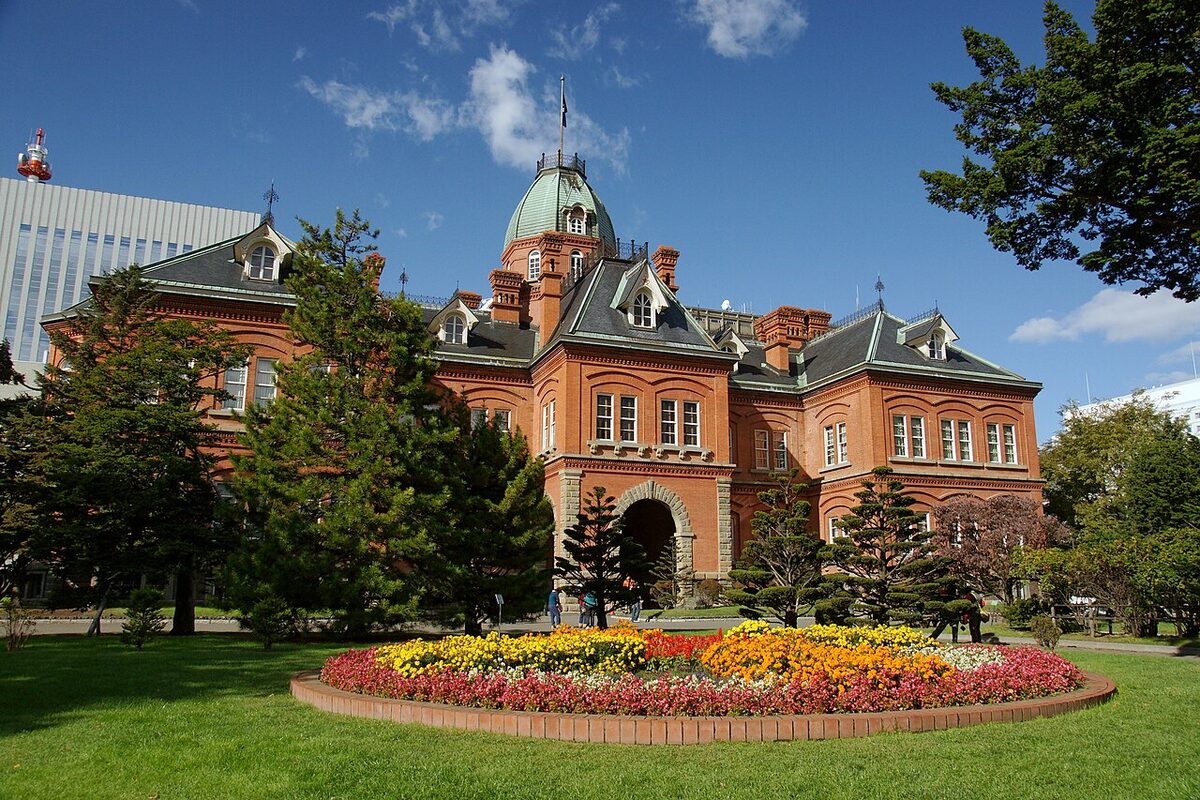
Former Hokkaido Government Office (the Red Brick Office), Sapporo
© 663highland / CC BY 2.5

Former Hokkaido Government Office 1888

Chūō-ku, Kita 3 Nishi 6

A Neo-Baroque landmark affectionately known as the "Red Brick." Laid with some 2.5 million bricks, it is a symbol of the pioneer age.

Front garden: trees around a pond — fresh green in spring, crimson leaves in autumn.
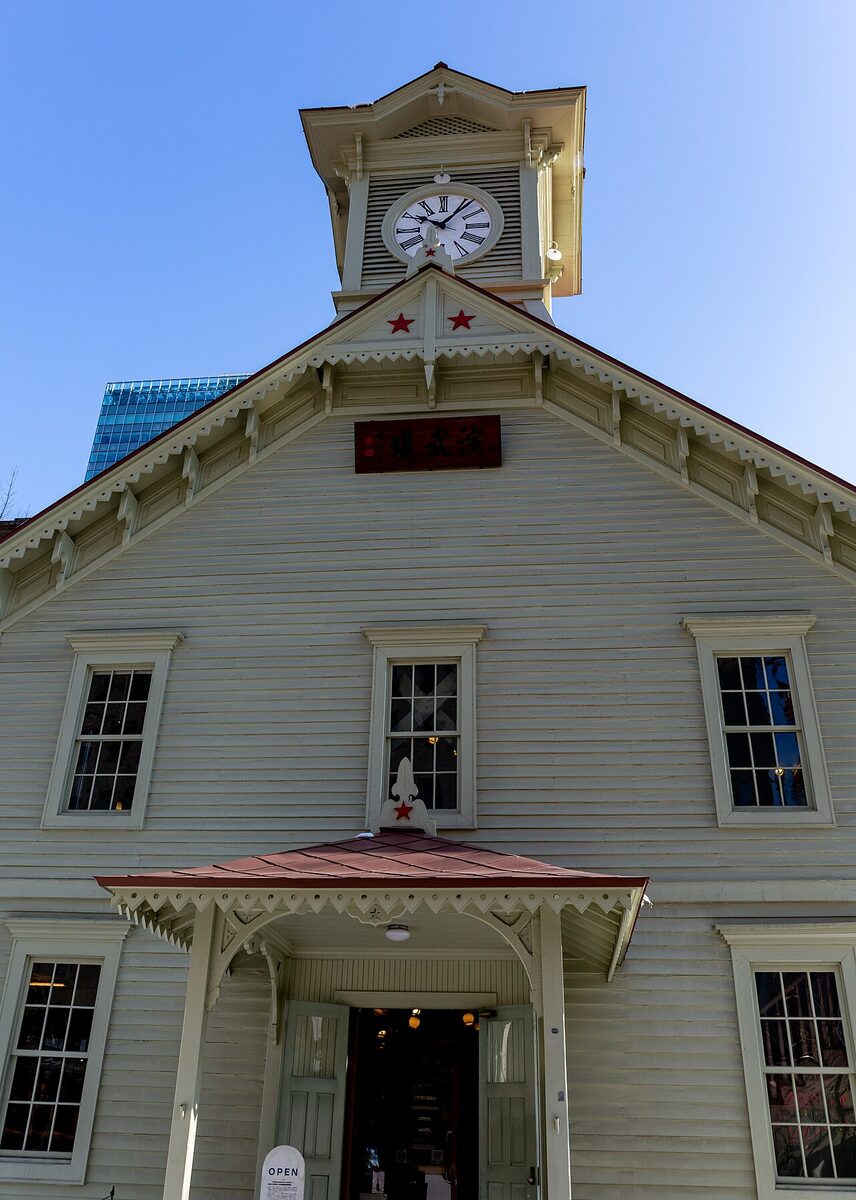
Sapporo Clock Tower (former drill hall of Sapporo Agricultural College)
Balon Greyjoy / CC0

Sapporo Clock Tower 1878

Chūō-ku, Kita 1 Nishi 2

The former drill hall of Sapporo Agricultural College — a remnant of the school Dr. Clark helped envision, and a symbol at the heart of the city.

The street: ringed by office blocks; its winter coat of snow has a charm all its own.
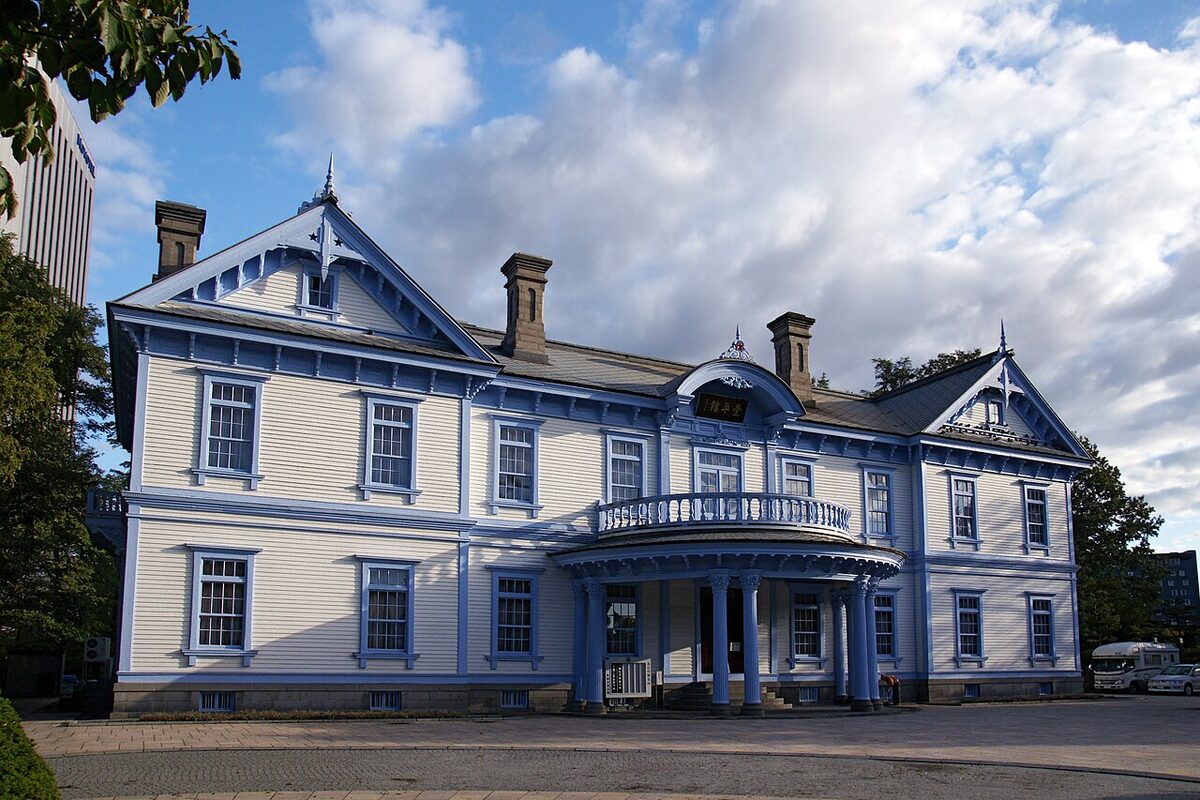
Hōheikan, Nakajima Park, Sapporo
© 663highland / CC BY 2.5

Hōheikan 1880

Nakajima Kōen 1-20, Chūō-ku

A Western-style hotel built by the Kaitakushi. A nationally designated Important Cultural Property, lovely for its pale ultramarine walls.

Nakajima Park: an iris pond, autumn colour, snow-lined avenues — a place to stroll in every season.
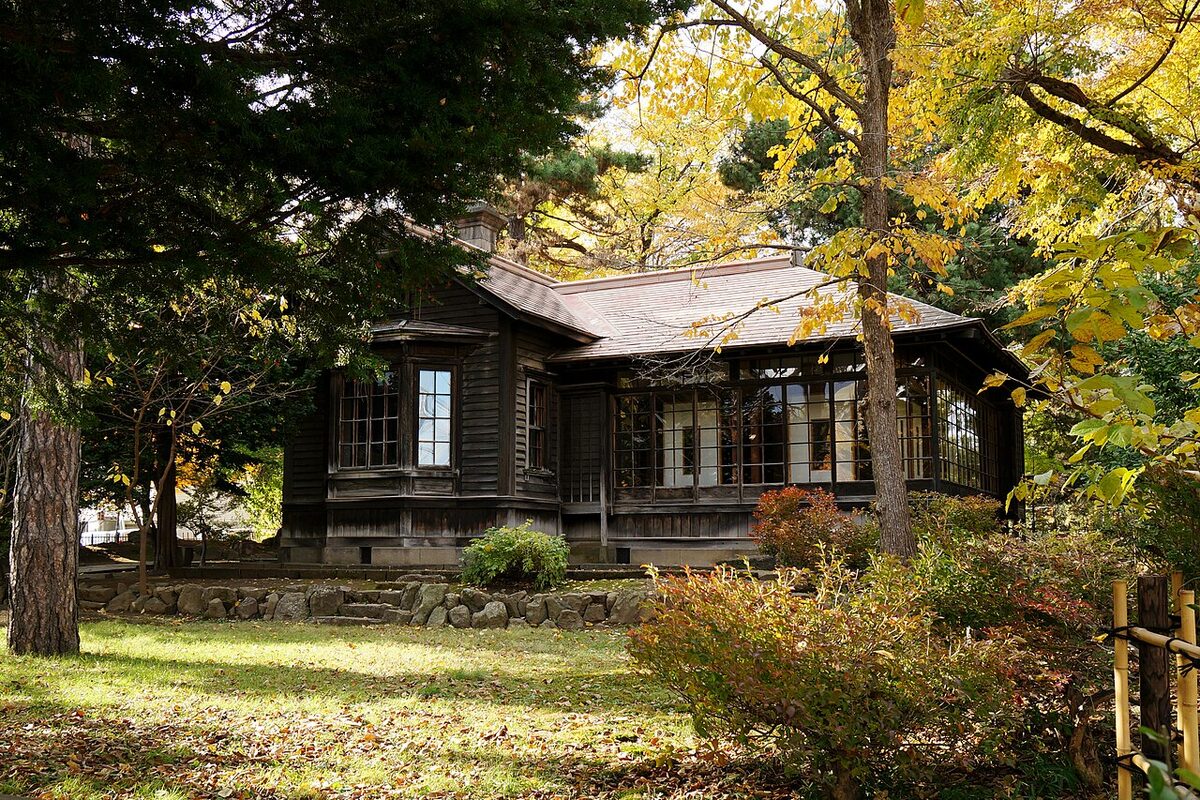
Seikatei, Sapporo — Kaitakushi guest house at Kairakuen
© 663highland / CC BY 2.5

Seikatei 1878

Kita-ku, Kita 7 Nishi 7

A guest house of the Kaitakushi, built in a blend of Japanese and Western styles. It preserves a trace of Kairakuen, Japan's first city park.

Old trees in the garden: pioneer-era trees survive in this quiet green space.
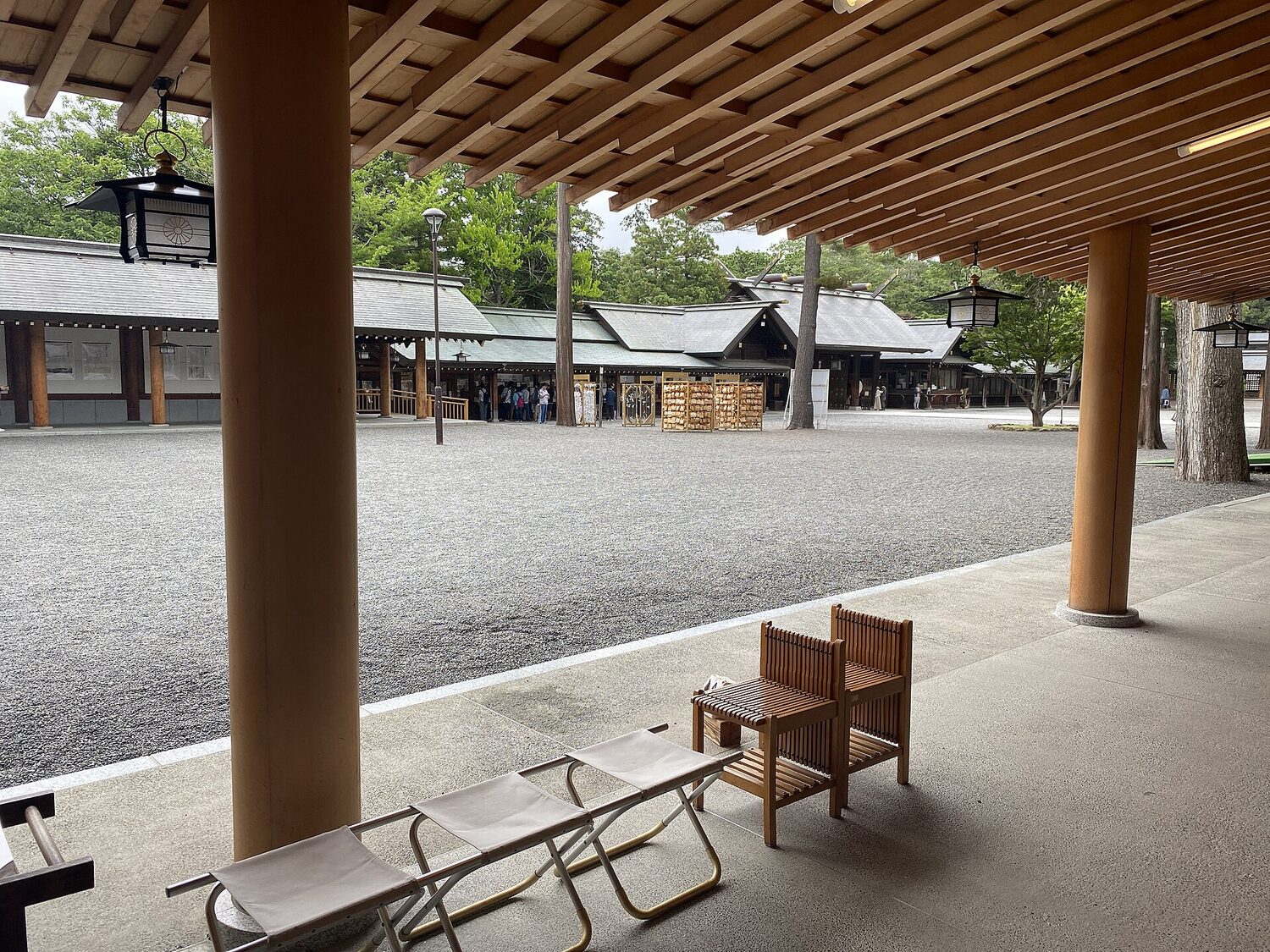
Hokkaido Jingū, Maruyama, Sapporo
© Immanuelle / CC BY 4.0

Hokkaido Jingū Three Pioneer Deities

Chūō-ku, Miyagaoka 474

It enshrines the "Three Pioneer Deities" as guardians of the settlement, and is a place tied to Shima Yoshitake.

Maruyama Park & primeval forest: a cherry-blossom spot (Ezo mountain cherry), Ezo squirrels and autumn colour.
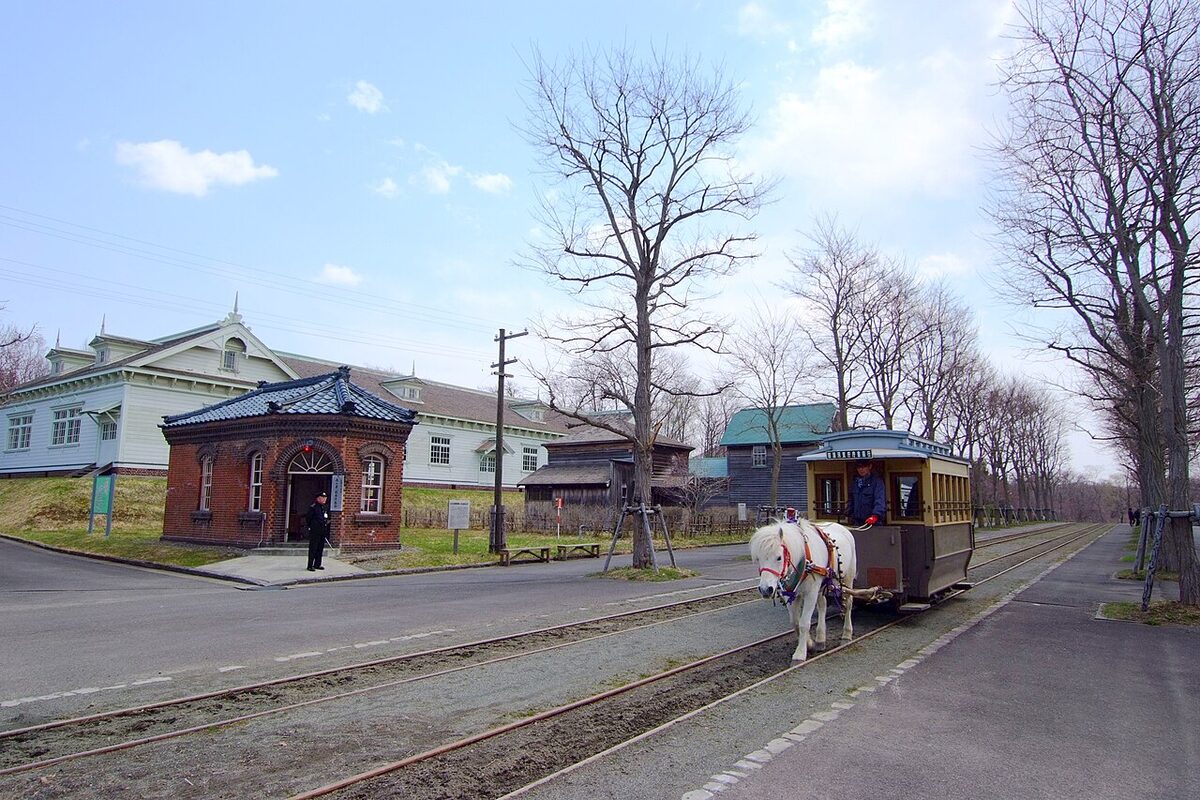
Historical Village of Hokkaido, Atsubetsu, Sapporo
© t-konno / CC BY-SA 3.0

Historical Village of Hokkaido open-air museum

Atsubetsu-ku, Atsubetsu-chō Ono-Poro 50-1

An open-air museum of Meiji- and Taishō-era buildings relocated and restored. A horse-drawn streetcar runs through it — you can walk right into the past.

Four seasons: fresh green and autumn leaves; in winter, sledding and snowshoeing.

Other Sites & Places of Note

Sapporo Beer Museum Higashi-ku, Kita 7 Higashi 9 — red-brick halls descended from the Kaitakushi Beer Brewery. The adjoining Sapporo Beer Garden is the same red brick. The ★ is the Kaitakushi's North Star emblem.
Hokkaido University (Sapporo Agricultural College) Kita-ku, Kita 9 Nishi 7 — the Clark statue, the poplar avenue, the Second Farm, and the ginkgo avenue in autumn (Kita 13-jō Gate).
Hokkaido Univ. Botanic Garden Chūō-ku, Kita 3 Nishi 8 — successor to the old Kaitakushi museum grounds, with pioneer-era buildings and giant trees.
Kotoni Shrine — Tondenhei House Nishi-ku, Kotoni 1-jō 7 — a soldier-settler's cottage from Kotoni, the first Tondenhei colony, preserved in the grounds.
Shinkotoni Tondenhei Company HQ Kita-ku, Shinkotoni 8-jō 3 — the company headquarters of a soldier-settler colony (a Meiji-era timber building).
Sapporo-mura Folk Museum Higashi-ku, Kita 16 Higashi 14 — telling of Ōtomo Kametarō's model farm and the "Ōtomo Canal," source of the Sōsei River.
Sapporo Hitsujigaoka Observation Hill Toyohira-ku, Hitsujigaoka — the full-length Clark statue, "Boys, be ambitious." Once the Meiji-era Tsukisamu cattle ranch and the Hokkaido Agricultural Experiment Station.
Shinoro Shrine & Ryūun-ji Kita-ku, Shinoro — an old settlement opened in the late Edo period (Ansei–Man'en) by Arai Kinsuke and Hayama Seitarō, whose graves lie at Ryūun-ji.
Chitosezuru Sake Museum Chūō-ku, Minami 3 Higashi 5 — founded 1872, Sapporo's only sake brewery. A local brew of the Sōsei-gawa East district.
Site of Ōtomo Kametarō's Official Residence Higashi-ku, Kita 6 Higashi 4 — here he dug the "Ōtomo Canal," laying the foundation for the later Sōsei River and Sapporo village.
Parks & seasons · 公園と季節

Trees, and the Turning of the Seasons

Many of Sapporo's historic sites stand among parks and tree-lined avenues. Here is the greenery planted and grown in the pioneer era, season by season.

🌸 Maruyama Park & Primeval Forest

Beside Hokkaido Jingū. A primeval forest designated a natural monument, and cherry blossoms in spring. Look for Ezo squirrels and wild birds, too.

🍁 Nakajima Park

A downtown green holding Hōheikan and a Japanese garden. Irises, autumn colour, and winter snowscapes.

🌳 Hokkaido Univ. Poplar & Ginkgo Avenues

The campus tied to Sapporo Agricultural College. In autumn, the ginkgoes at the Kita 13-jō Gate turn to gold.

🌷 Ōdōri Park

Once a firebreak protecting the city from fire. Now seasonal flower beds and lilacs — early-summer colour.

🌲 Kairakuen Green (Seikatei)

A remnant of Japan's first city park, laid out by the Kaitakushi. Pioneer-era trees quietly remain.

❄️ Historical Village

An open-air museum where snow and fresh green wrap the relocated Meiji buildings. The scenery transforms with the seasons.

Renovation · 古建築めぐり

Old Buildings, New Places to Linger

In recent years Sapporo has seen more of its historic buildings and old houses given new life as cafés and shops. Spend an hour in a space that wears its age well.

Kitakaro Sapporo Main Hall

Chūō-ku, Kita 1 Nishi 5-1-2

The 1926 former Hokkaido Prefectural Library, renovated to a design by Tadao Ando. A shop on the ground floor, and a café ringed by bookshelves upstairs.

Morihico (Main Store)

Chūō-ku, Minami 2 Nishi 26-2-18

A house café in a residential quarter of Maruyama, set in a timber house over 70 years old. A pioneer of Sapporo's old-house café scene.

Former Nagayama Takeshirō Residence

Chūō-ku, Kita 2 Higashi 6

The residence (c. 1880) of Nagayama Takeshirō, the Kaitakushi's second director, together with a former Mitsubishi Mining dormitory. Open to visitors, with tea served inside.

Former Oguma Residence (Dolly Barden)

Chūō-ku, Fushimi 5-3-1

A celebrated 1927 house designed by the architect Yoshiya Tanoue. Relocated to the foot of Mount Moiwa, it lives on today as a shop and café.

Sapporo Factory

Chūō-ku, Kita 2 Higashi 4

A shopping complex grown around the red-brick hall of the Kaitakushi Beer Brewery. Shops line a retro world of brickwork.

Sarō Hōmu (gallery & café)

Higashi-ku, Honchō 1-jō 1-8-27

A gallery and café set in an old building. Enjoy a healthy lunch or a pot of tea while you take in the exhibits.

Sapporo Coffee Kan

Toyohira-ku, Hiragishi 2-jō 6 (Hiragishi) / Tsukisamu-nishi 1-jō 7 (Tsukisamu) & more

A coffee house with branches set in historic buildings across the city. Sip a cup in the aged rooms of the Hiragishi or Tsukisamu shops. (Bonus: "Rinboku" in Bunkyōdai, Ebetsu, belongs to the same company.)

Sapporo City Archive Hall

Chūō-ku, Ōdōri Nishi 13

The 1926 former Sapporo Court of Appeals. A weighty building of soft stone, with a café inside, at the western end of Ōdōri Park.

* Opening days, hours and current status vary by shop. Please check official information before you set out.

Stories · 開拓ものがたり

Rivers, Roads, and the Names of People

Ōtomo Kametarō and the Sōsei River — Ōtomo Kametarō (1834–1897) was a shogunal retainer who studied the Hōtoku methods under Ninomiya Sontoku. He crossed to Hokkaido in 1858 and, after success clearing land at Kikonai and Ōno, opened Motomura — the later Sapporo village — in 1866. The roughly 4 km irrigation channel he dug then, the "Ōtomo Canal" — a work others called "a million-ryō undertaking" — was later extended and, in 1874, named the "Sōsei River." The city's north–south, east–west origin point is set by this river.

The Toyohira and Shōjin Rivers — it was the power of rivers that built the city. The Toyohira River, one of Japan's swiftest, is a "raging river" that changed shape with every heavy rain. It is said that it once bent north near the center of Sapporo, followed the Fushiko River, and joined the Ishikari River at Shinoro; one of its distributaries is the Kamokamo River at the head of the Sōsei (the present course dates from a 1941 improvement). A tributary, the Shōjin River, is o-so-ushi in Ainu — "a river with a waterfall at its mouth." Because fish could not climb past the falls, some say it was called the river beyond which there were no fish — a "fasting" (shōjin) river.

Mount Moiwa and a Muddled Name — Mount Moiwa was a sacred mountain to the Ainu. Its name comes from the Ainu inkar-us-pe (the place one always climbs to keep watch). The word "moiwa (small mountain)," meanwhile, originally referred to neighbouring Mount Maruyama. Meiji-era settlers are said to have swapped the two, and the names simply stuck. The primeval forest on its slopes, a natural monument, still shows the face of a northern woodland the pioneers never touched.

The Two Founders of Sapporo — Shimura Tetsuichi and Yoshida Mohachi, who served as ferrymen on the banks of the Toyohira River from around 1857, before the Kaitakushi arrived, are called the "founders of Sapporo" (a monument to Yoshida Mohachi stands by the Sōsei Bridge). A note: not the "Kameda brothers" — but rather these two founders plus the father of the Sōsei River, Ōtomo Kametarō. Three names all too easily muddled.

About Shinoro — opened earlier than the city center, in the late Edo period, by Arai Kinsuke and Hayama Seitarō, Shinoro (Kita-ku) is among the oldest settlements in Sapporo. Its story lingers at Shinoro Shrine.

How Gyōkei-dōri Got Its Name — "Gyōkei-dōri" (Minami 14-jō Street), running west from Nakajima Park, is named for the road along which Crown Prince Yoshihito — the future Emperor Taishō — made a royal visit (gyōkei) in 1911. Street names carrying such histories still live on across the city.

Archives · 史料をたずねる

Learn More (Records & Archives)

To dig deeper into the record of the pioneering, visit these institutions, where documents, photographs and tools of the age are preserved and displayed.

Hokkaido Museum Atsubetsu-ku, Ono-Poro — the former Historical Museum of Hokkaido; a general museum of the region's nature and history.
Historical Village of Hokkaido Atsubetsu-ku, Ono-Poro — an open-air museum of relocated Meiji and Taishō buildings.
Sapporo City Archives Chūō-ku — preserving the administrative documents and records of the City of Sapporo.
Hokkaido Prefectural Archives Chūō-ku (within the Prefectural Library and elsewhere) — holding official records dating back to the Kaitakushi.

Photo credits: Red Brick Office, Hōheikan, Seikatei © 663highland (CC BY 2.5) / Clock Tower Balon Greyjoy (CC0) / Historical Village of Hokkaido © t-konno (CC BY-SA 3.0) / Sapporo Beer Museum © MIKI Yoshihito, derivative: MrPanyGoff (CC BY 2.0) / Hokkaido Jingū © Immanuelle (CC BY 4.0) — all via Wikimedia Commons.
This page is a general overview. Dates and origins are subject to differing theories, and the current condition of the sites (renovations, public access) may change. For details, please check the official information from each institution and from the City of Sapporo.

Related