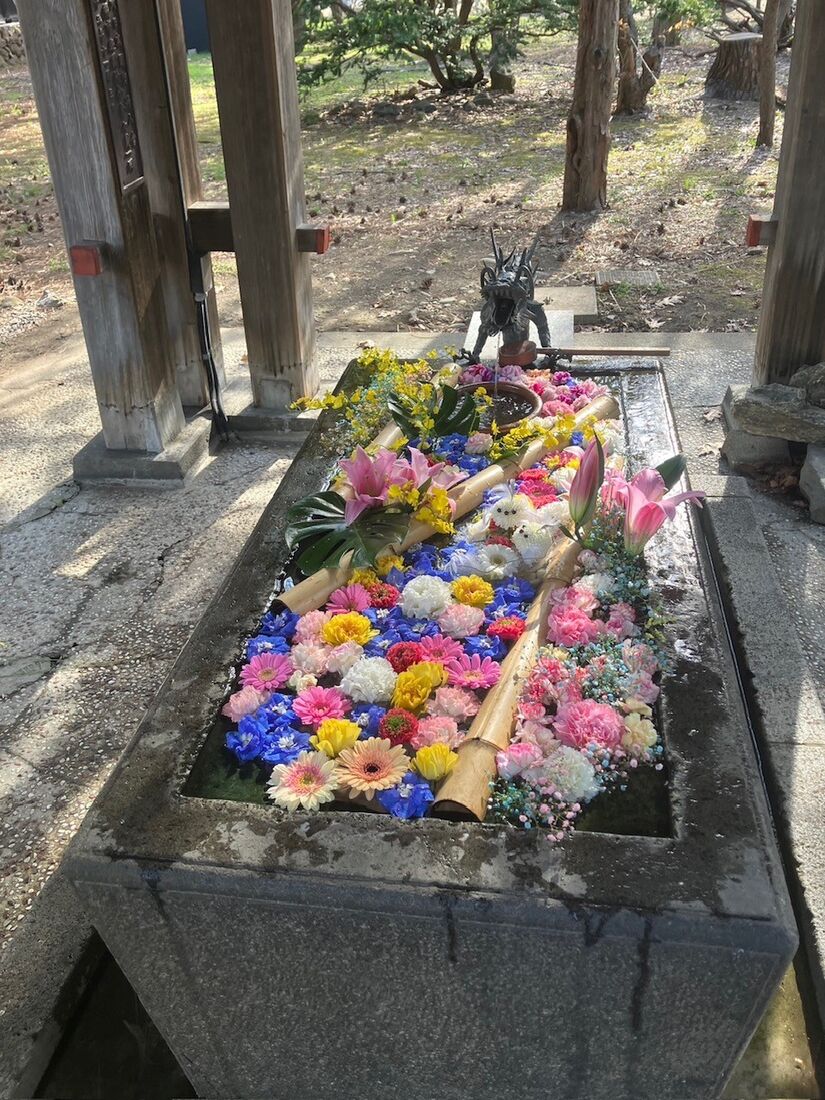
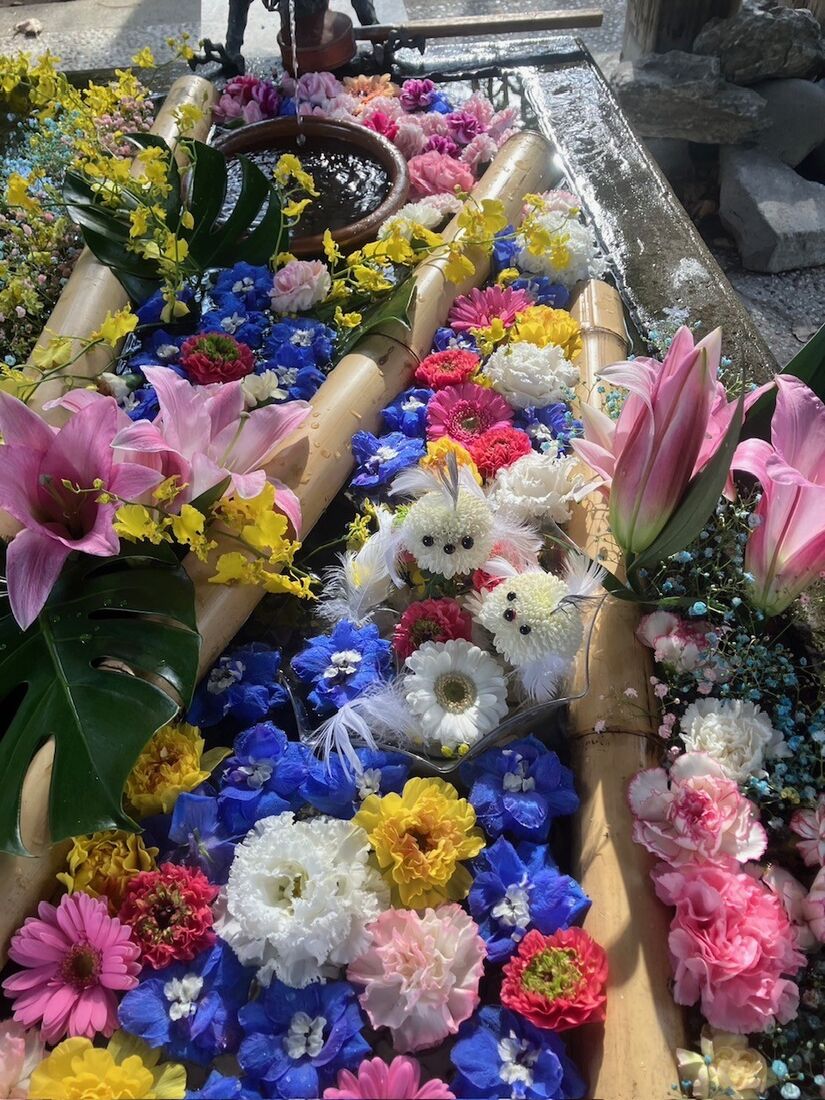
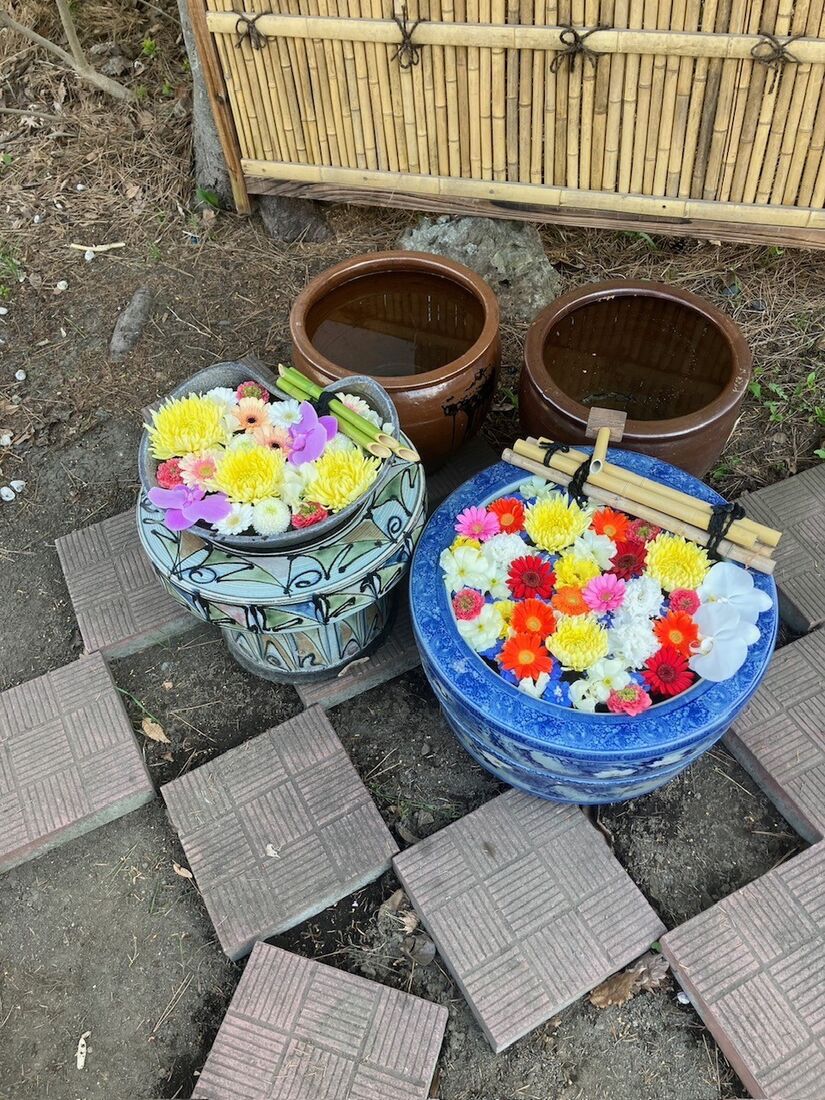
Japanese loves to hide words inside numbers — a playful tradition called goroawase. Read aloud, 8 becomes “ha” and 7 becomes “na”. Together they say ha-na — 花, the word for flower. So e87 simply means flower, written in numbers.
Sapporo, the heart of Japan’s northern island of Hokkaido, was chosen to host the Winter Olympics twice — 1940 (cancelled by war) and 1972 (held — Asia’s first Winter Games). As settlers gathered here, temples and shrines took root across the city, and their seasonal festivals live on.
北海道・札幌。冬季五輪の開催地に2度選ばれた街(1940年=中止/1972年=アジア初の冬季五輪を開催)。街に根づいた寺院と神社、四季の祭事をご案内します。


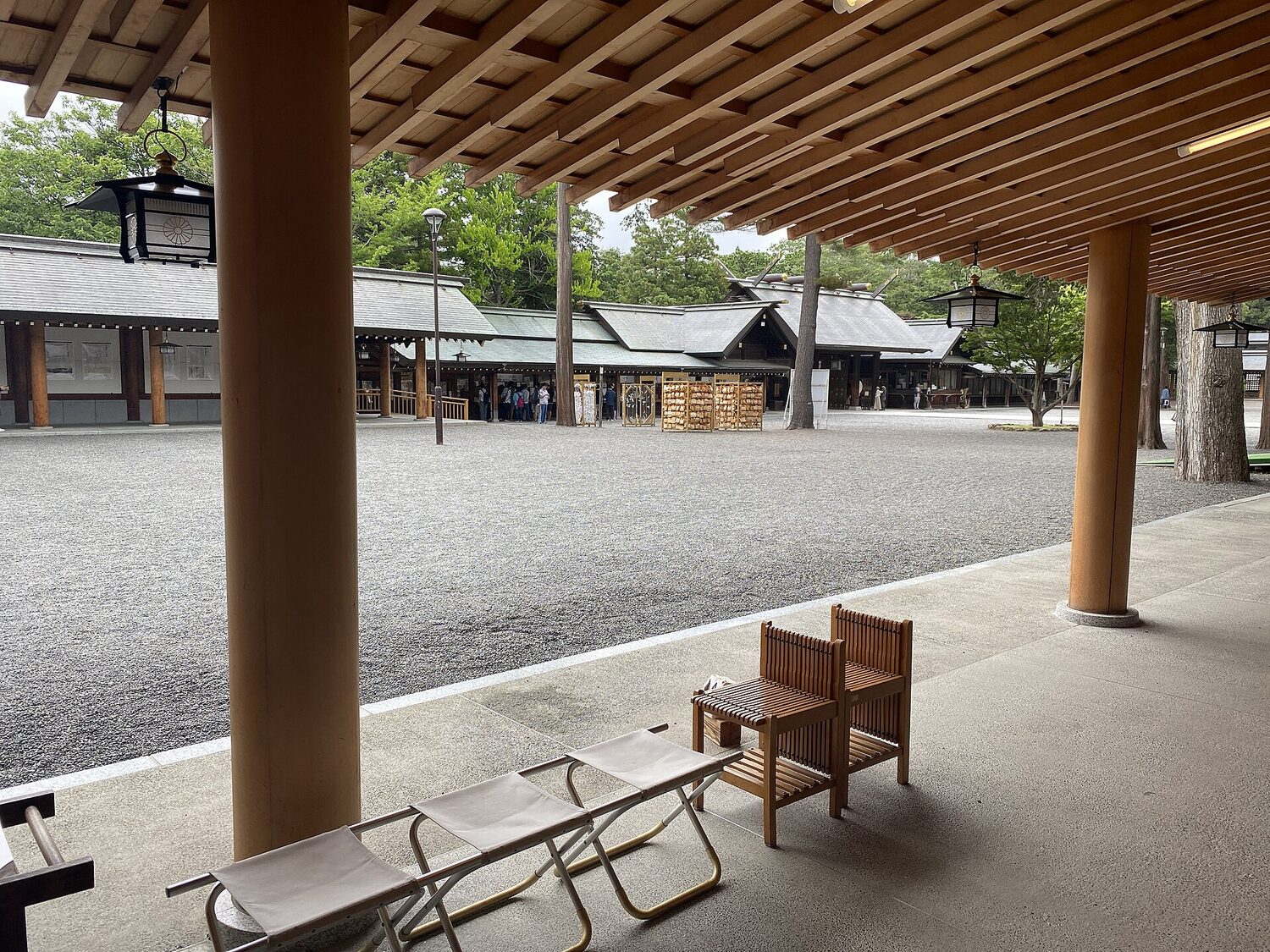
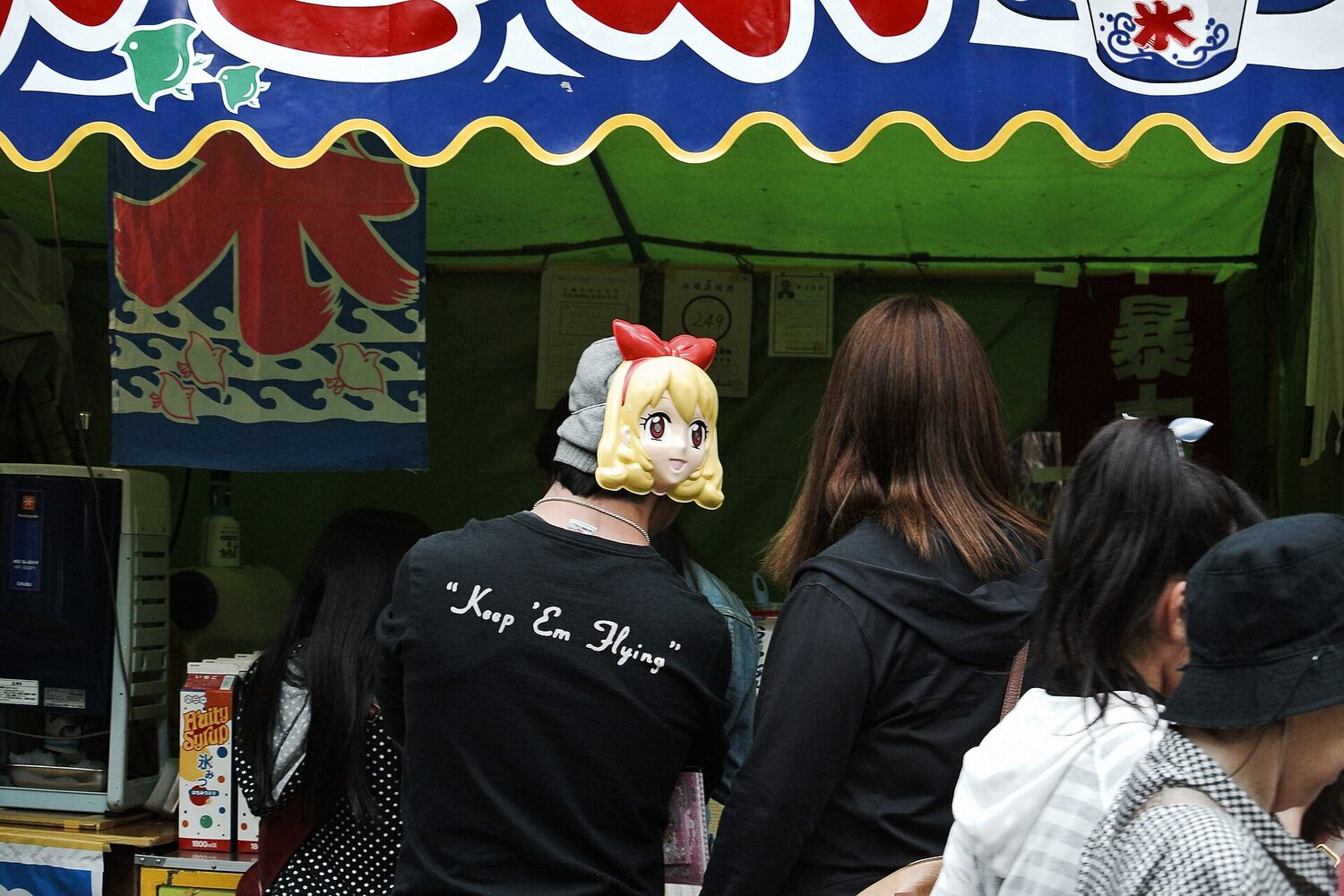
Hokkaido Jingū: Immanuelle / CC BY 4.0 · Sapporo Festival: MIKI Yoshihito / CC BY 2.0 — Wikimedia Commons
Reading on flowers, faith and the year of the north — from etiquette to seasonal features.
Guides and seasonal features on flowers, faith and the year of the north.
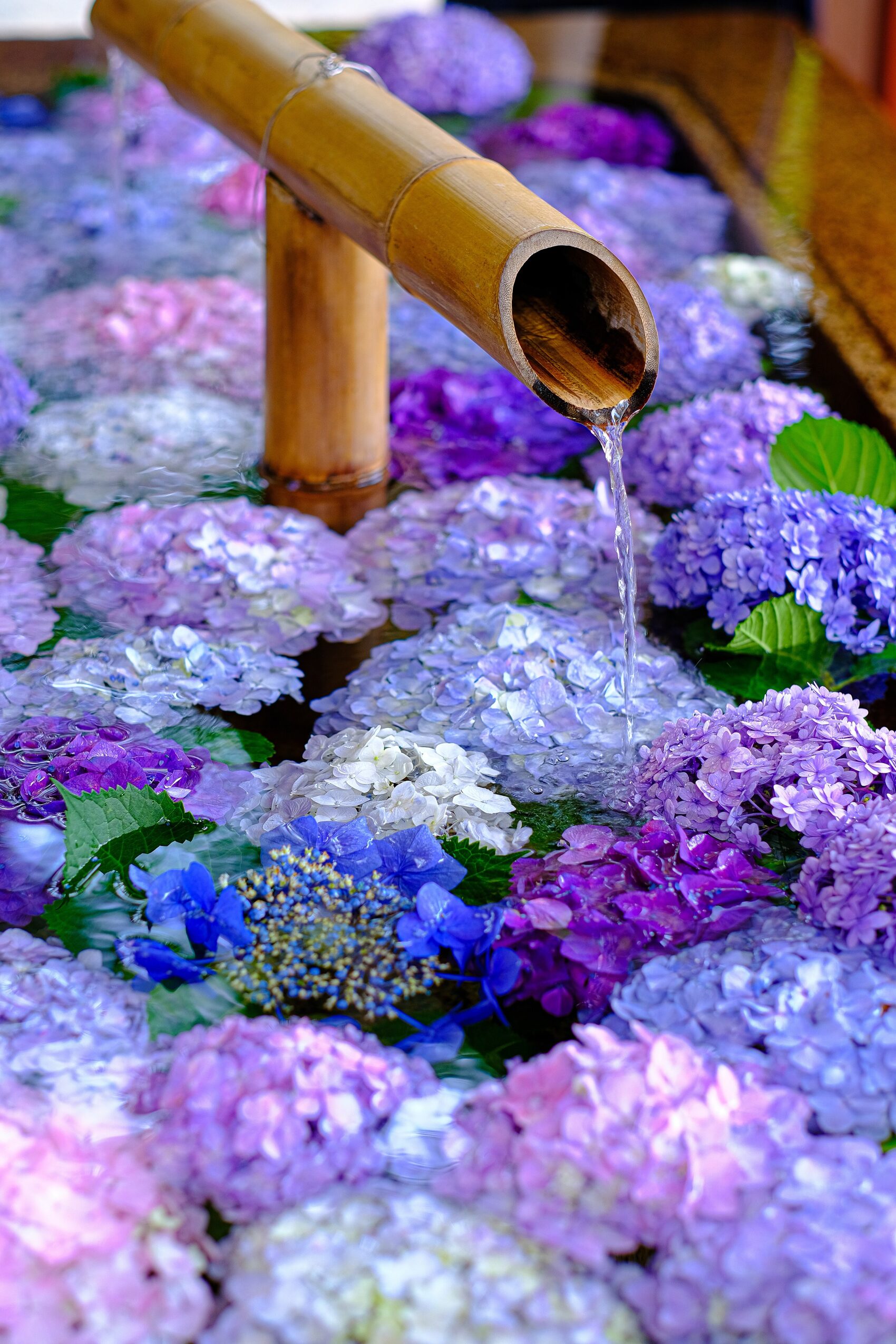
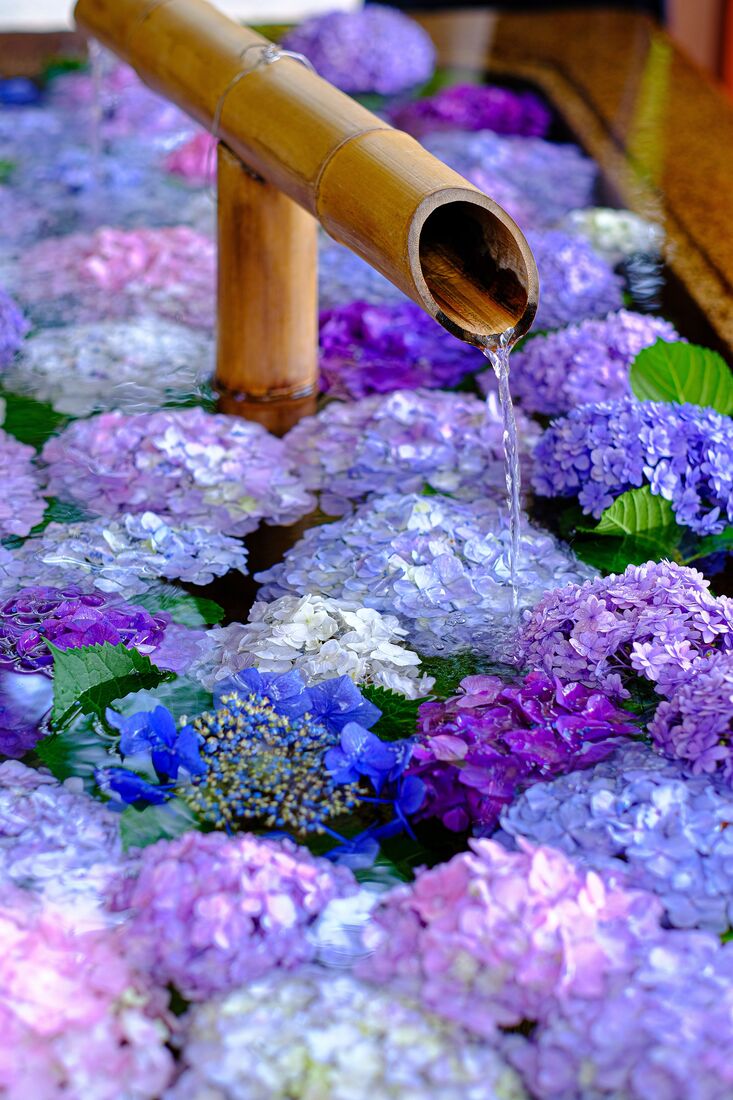
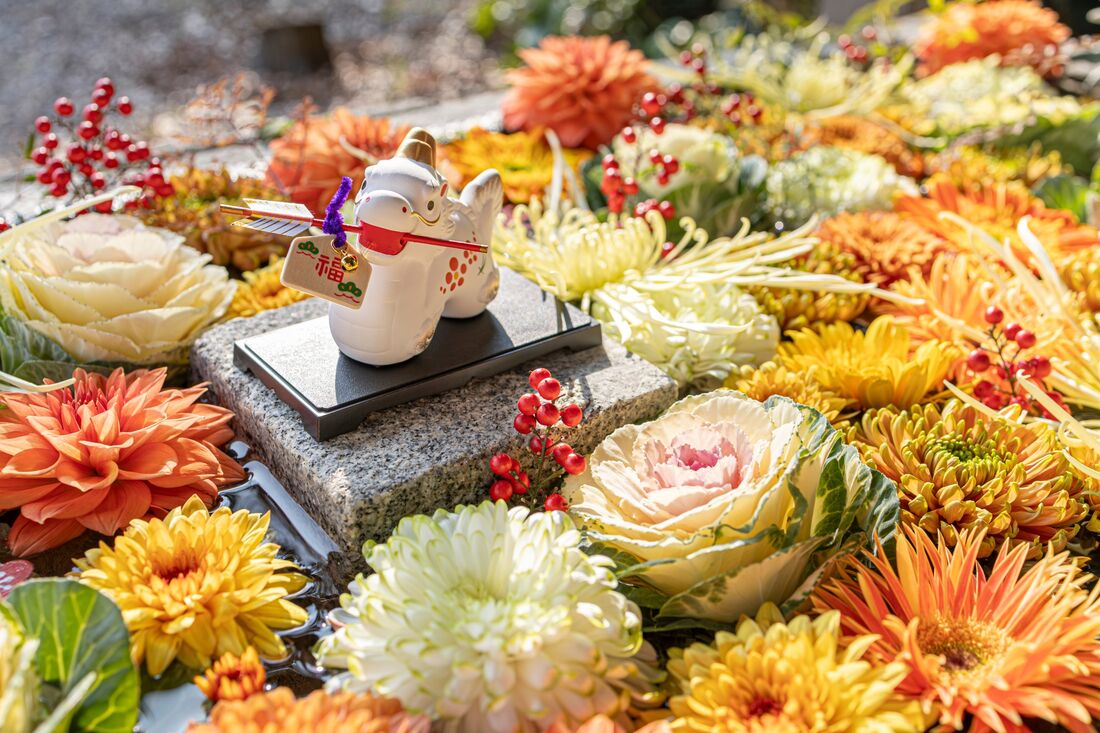
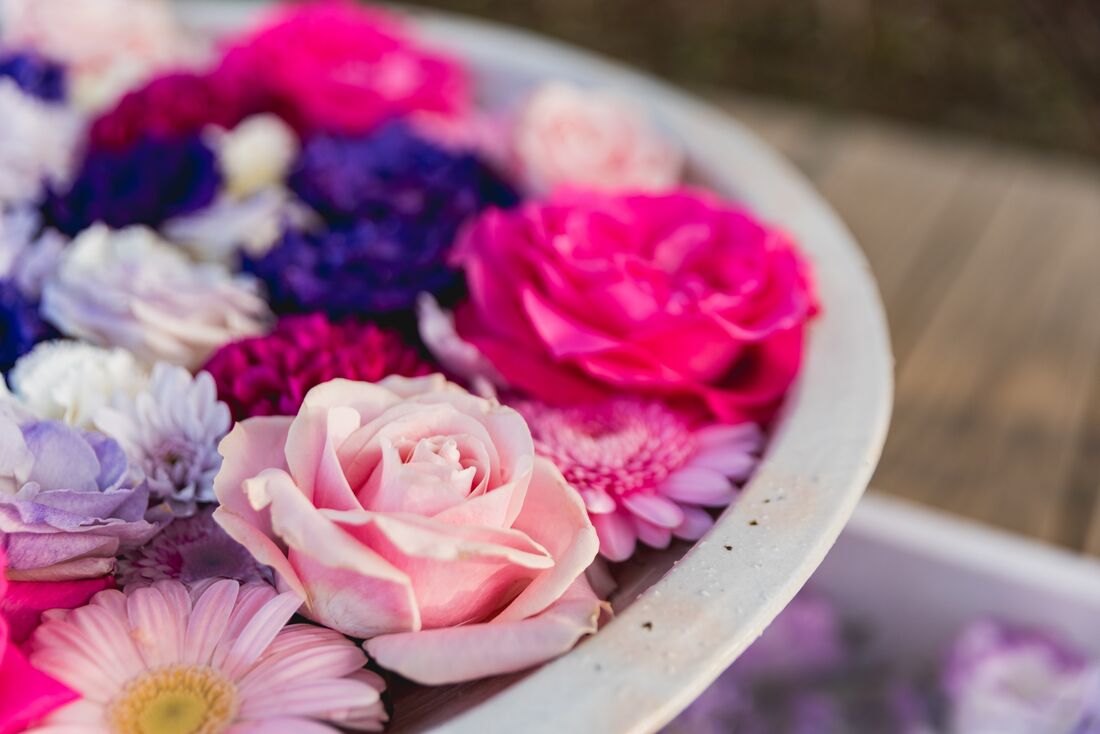
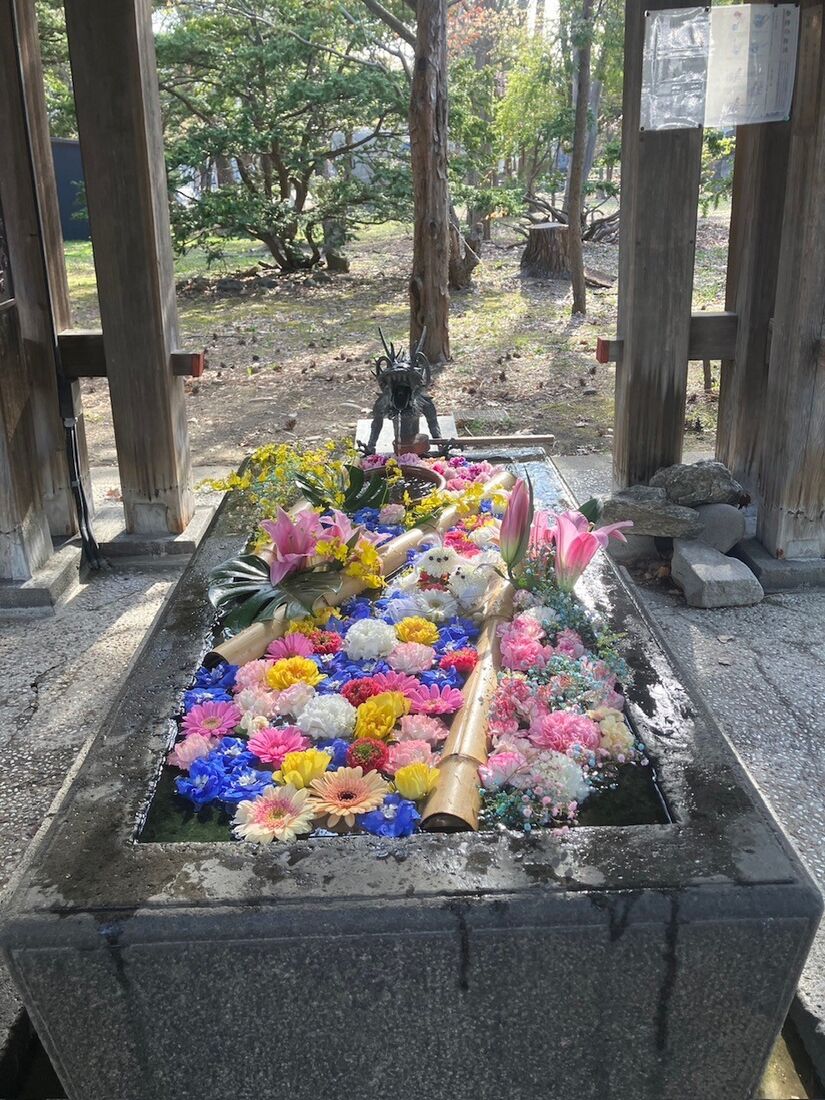
Seasonal flowers afloat on the purification basin — their origins, the etiquette, the flowers of each season, and hanachōzu to find across Sapporo.
Hanachōzu — flowers on sacred water
The ink calligraphy and vermilion seal that prove a visit. How to receive one, how to read it, and goshuin to collect across Sapporo.
Goshuinchō — a book of your pilgrimage
First-shrine visits, snow-dressed halls, iced hanachōzu. Into the temples and shrines of Sapporo, hushed in white.
Snow & the sacred
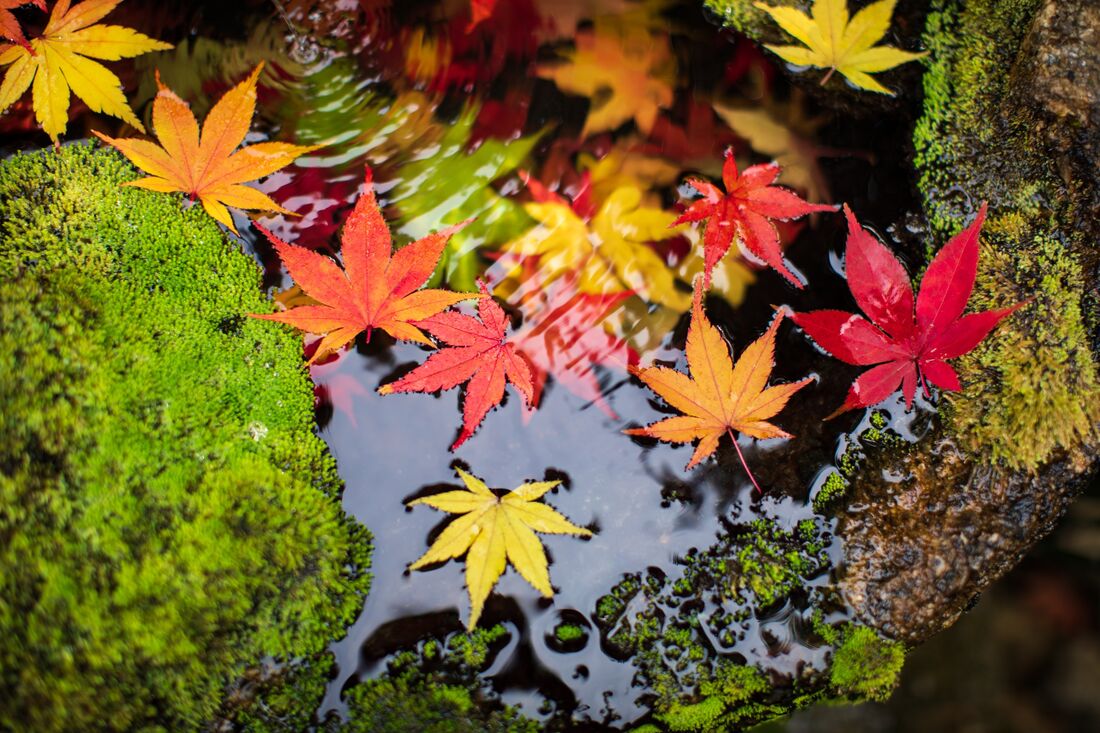
Spring cherry blossoms, summer festivals, autumn maples, winter snow. Flowers, scenery and the sacred, forever turning.
The four seasons of Sapporo
Temples & shrines plotted on the map of Sapporo. Filter annual festivals by month, zoom, search, and sync with the list.
寺社 行事マップ
Browse by sect, ward, type, or keyword. Festival dates with sources, and CSV export.
寺社 一覧